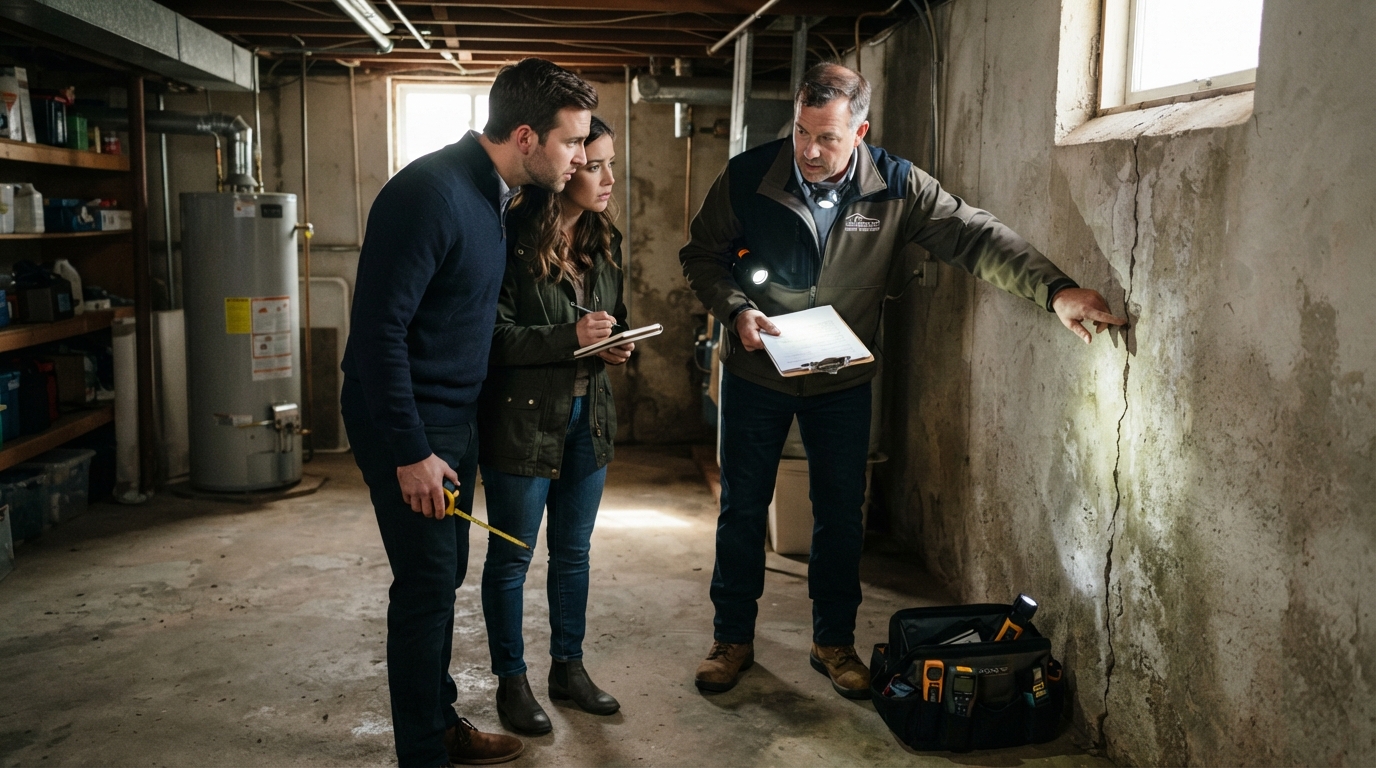
Buying your first home is one of the most significant milestones in your life, but it is also a process fraught with anxiety. While the excitement of paint colors and furniture layouts is palpable, the inspection phase is where the reality of your investment becomes clear. A professional home inspection is not just a formality; it is a critical safeguard. Understanding the difference between minor maintenance issues and systemic failures is essential for any first-time buyer.
1. Structural Instability and Foundation Cracks
The foundation is the literal bedrock of your property. If the foundation is compromised, nothing else in the house truly matters. As a buyer, you should be wary of specific visual indicators that suggest structural distress. While small hairline cracks in concrete are common due to settling, horizontal cracks are a major warning sign.
- Horizontal Cracking: Often indicates hydrostatic pressure pushing against the walls.
- Stair-step Cracks: Frequent in brick or block foundations, indicating uneven settling.
- Door and Window Alignment: If doors and windows are sticking or do not close squarely, it may mean the frame of the house has shifted.
- Floor Slope: Visible sagging or unevenness in the floors should trigger a professional structural engineer evaluation.
If your inspector flags these issues, do not move forward until you have a specialist provide a formal estimate for stabilization, which can sometimes reach tens of thousands of dollars.
2. Outdated Electrical Systems
Modern homes demand significant electrical power to run appliances, smart devices, and high-efficiency HVAC systems. If the home you are eyeing has outdated electrical components, you are not just facing a budget headache—you are facing a legitimate fire risk. Older homes often feature systems that were never meant to handle today’s load.
- Knob-and-Tube Wiring: A safety hazard that is notoriously difficult to insure.
- Aluminum Wiring: Common in the 1960s and 70s, it is prone to overheating at connection points.
- Double-Tapped Breakers: An inspector will look for two wires connected to a single breaker, which can overload the circuit.
- Lack of GFCI Outlets: Kitchens and bathrooms require Ground Fault Circuit Interrupter outlets to prevent electrocution near water sources.
If you see evidence of amateur wiring, such as junction boxes without covers or exposed splices, prioritize a licensed electrician’s opinion before the closing date.
3. Extensive Water Damage and Mold Growth
Water is the number one enemy of any residential structure. The presence of water damage, whether past or present, can lead to rot, structural decay, and the growth of toxic mold. Many sellers attempt to paint over stains, but an experienced inspector can usually identify the source of the moisture.
Look for signs such as persistent musty odors, peeling wallpaper, or dark patches on ceilings and baseboards. Mold thrives in dark, damp spaces like crawlspaces, basements, and attics. If you see signs of mold, it is not enough to simply clean it; you must address the root cause, such as a leaking roof, failing gutters, or improper attic ventilation, otherwise, the mold will inevitably return.
4. Compromised Roofing and Attic Ventilation
The roof is your home’s primary defense against the elements. Replacing a roof is a capital-intensive project that can easily set a homeowner back over ten thousand dollars. When your inspector heads onto the roof, they aren’t just checking for missing shingles; they are checking for the longevity of the entire system.
- Layering: Check if there are multiple layers of shingles, which adds significant weight and complicates future repairs.
- Curling or Granule Loss: These are signs that the asphalt shingles have reached the end of their lifespan.
- Flashing Issues: Look for cracked or rusted metal flashing around chimneys and vents, which are common entry points for leaks.
- Attic Moisture: Inspect the underside of the roof decking in the attic; dark staining often indicates leaks that haven’t yet reached the living space below.
5. HVAC System Failures
Your heating, ventilation, and air conditioning system is the heart of your home’s comfort. Because HVAC systems have a finite lifespan—typically 15 to 20 years for furnaces and 10 to 15 years for air conditioners—you need to know exactly how much life is left in the unit. A failing system will not only spike your energy bills but may also struggle to maintain temperature during extreme weather.
Ask the inspector to check the age of the unit, the condition of the ductwork, and the quality of the airflow. If the system is near the end of its life, this becomes a powerful negotiation point. You might ask for a home warranty to cover future repairs or a credit toward the replacement cost, ensuring you are not stuck with a massive bill shortly after moving in.
6. Improper Plumbing and Sewer Line Issues
Plumbing issues go far beyond a leaky faucet. You need to be concerned about the integrity of the main water supply and the waste disposal system. In older homes, iron or galvanized steel pipes may be corroded from the inside out, leading to poor water pressure and eventual leaks. Furthermore, tree roots often infiltrate main sewer lines, creating clogs that can cause sewage to back up into the home.
First-time buyers should always consider paying for a separate sewer scope inspection. This involves sending a camera down the sewer line to the city connection. Identifying a collapsed or root-invaded pipe before closing can save you from a catastrophic financial loss that homeowner’s insurance typically does not cover.
7. Hazardous Materials and Insulation Concerns
Homes built before 1978 are highly likely to contain lead-based paint, while homes built before the mid-1980s may contain asbestos, particularly in insulation, floor tiles, and pipe wrapping. While these materials are often harmless if left undisturbed, they become a significant concern if you plan on renovating or if the materials are crumbling.
Your inspector will likely mention these as general warnings. It is up to you to decide your risk tolerance. If you are planning a major renovation, consult with an environmental specialist to get an estimate for abatement. Understanding what is hidden behind the walls is vital for both your health and your financial planning.
8. Negotiating After the Inspection
Once you have identified these red flags, the most important step is deciding how to handle them. You are not obligated to accept the home as-is unless your contract specifically states otherwise. Use the report as a tool, not just a list of grievances. Prioritize safety issues over cosmetic concerns.
- Request Repairs: Ask the seller to fix specific items before closing.
- Negotiate Credits: Ask for a price reduction or seller concessions to cover the cost of professional repairs after you take ownership.
- Walk Away: If the inspection reveals systemic failure that you cannot afford or don’t want to deal with, use your inspection contingency to exit the contract.
Remember, the goal is to make an informed decision. Don’t be afraid to ask your inspector questions throughout the process. Their role is to provide you with a clear, objective snapshot of the property’s health so you can buy with confidence.